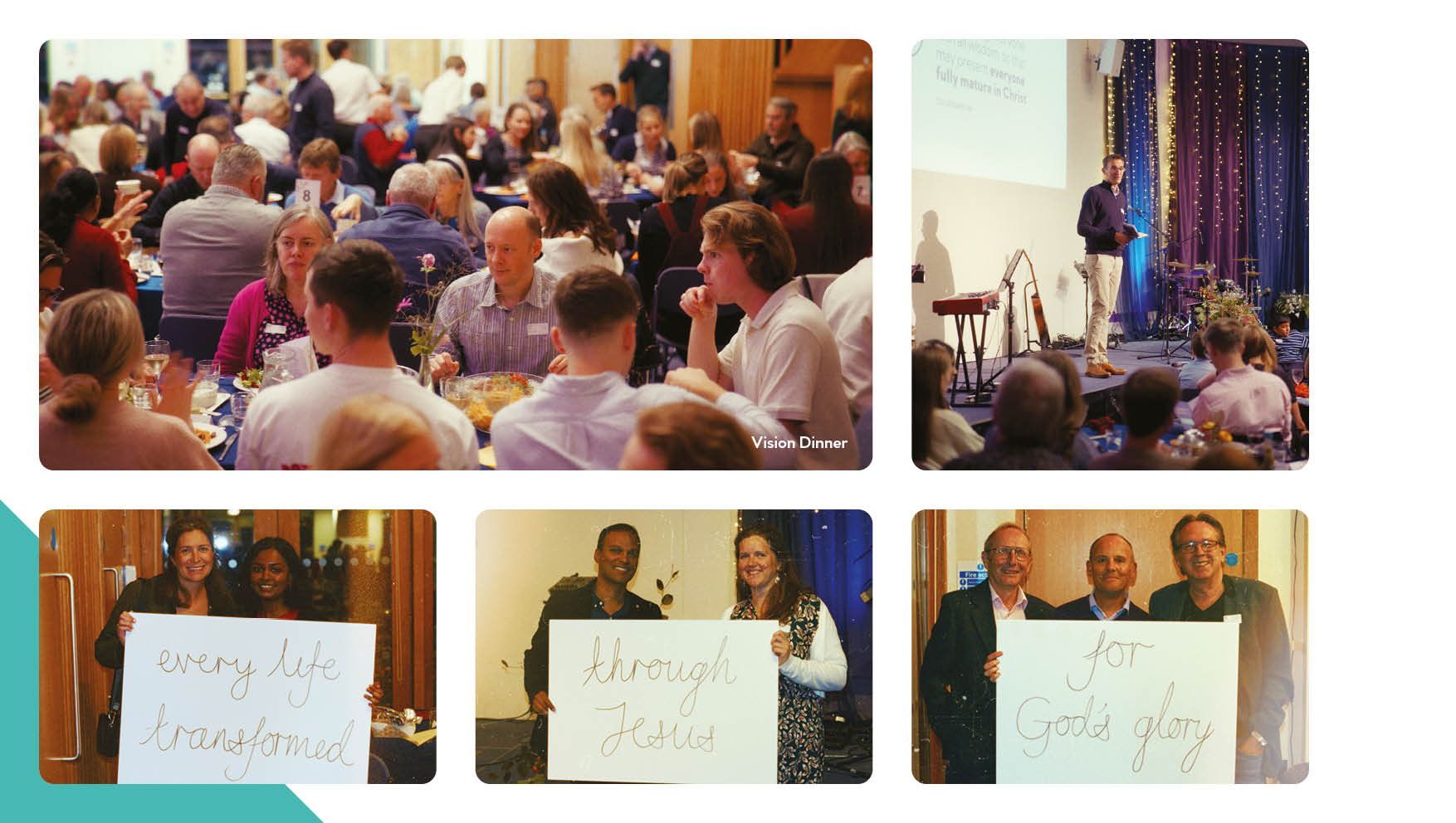
Our vision as a church is to see every life transformed through Jesus, for God’s glory. That is why we are committed to reaching our communities with the gospel, growing disciples to maturity, and resourcing gospel ministry to grow God’s kingdom. Reading good books can help us do just that—not least books about evangelism, because it is something many of us find hard!
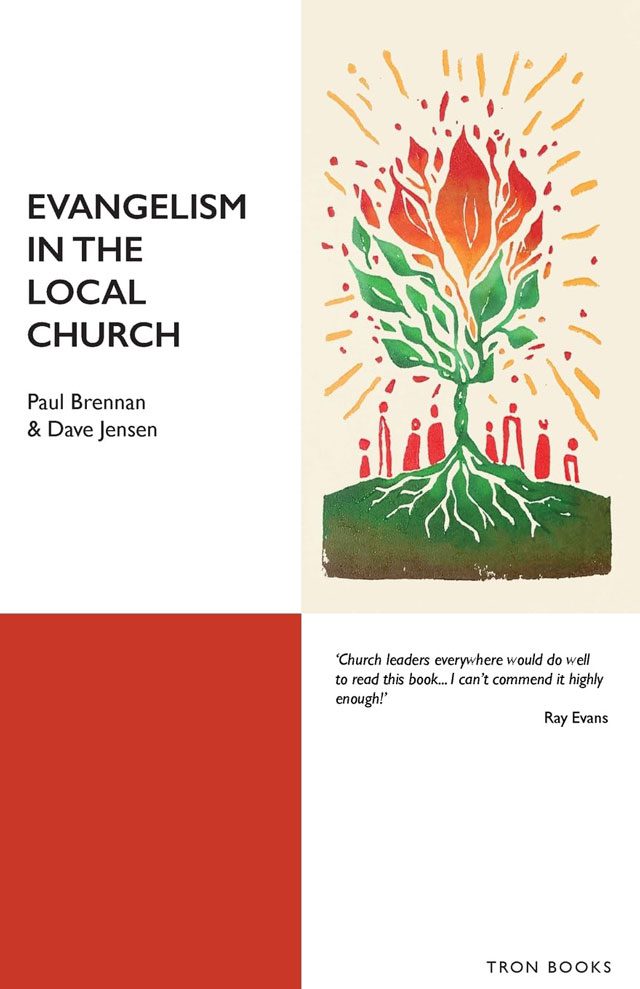
A recently published book, Evangelism in the Local Church, has struck a chord with evangelical churches in the UK and beyond because it addresses a challenge we all face: how are we going to reach the people living around us who do not yet know Jesus? One of its authors, Paul Brennan, spoke at our inaugural A Church on Mission evening last year, while his co-author, Dave Jensen, is an international speaker and writer whom a number of us heard at All Souls Langham Place two years ago. I have been in regular contact with Paul and Dave over the past three years, and they have a wealth of wisdom to share—wisdom that I am delighted has now been captured in one place.
We have read the book as a staff team, and the Mission Team is currently reading it together. One person recently said to me, “I now understand why we’re doing what we’re doing in mission at Saint James.” That is why we are recommending it to the whole church family: if we all understand more clearly what we are trying to do, we will be better placed to see how each of us can play our part.
Over the coming months, we are serialising selected sections of Evangelism in the Local Church in SJT. Rather than asking the whole church family to buy a copy and read it cover to cover, each week we will include a selected extract, reproduced with the authors’ permission. In time, we will have read pretty much the whole book!
The best way to make the most of the series is simply to keep reading from week to week. Each week will include a short reminder of where we have reached and why the next section matters. If you miss a week, the same serialisation page will also contain the previous instalments, so you can catch up at any point. And if a section particularly interests you, do read ahead: copies of the complete book are available from the bookstall, or you can order a copy here.
Our hope and prayer is that this will be a real blessing to us as we seek to reach the 45,000 with the gospel. But don’t take my word for it—check out the first instalment by clicking on this link and see why the authors think we should read this book: Evangelism in the Local Church, and Why We Should Read This Book
Craig Larner
Mission Pastor
This book is for those who carry responsibility for evangelism in the local church. But before we can say exactly who that includes, we need to be clear about what we mean by the two words at the centre of everything that follows: evangelism and the local church.
The word evangelism comes from the Greek word euangelion, meaning good news or gospel. In the ancient world, a gospel was not advice or self-help. It was an announcement. A declaration that something decisive had happened. That is how the New Testament uses the word. The Christian gospel is the announcement of what God has done in Jesus Christ. His life. His death. His resurrection. His reign. And the call for a response.
That is crucial. The resurrected Lord Jesus makes that plain as he speaks to his disciples in Luke 24:46–47. He says that they are to be witnesses to his suffering and his resurrection and ‘that repentance for the forgiveness of sins should be proclaimed in his name to all nations.’ It’s not just the events of Jesus’ life, death and resurrection we’re to announce, but the implication of those events. We’re to call people to respond in repentance and faith. That’s evangelism.
When we speak of evangelism in this book, we are always referring to the proclamation of the gospel with a call to respond.
Not one method. Not one program. Not one preferred style. Evangelism is taking responsibility for ensuring that the people you already know are genuinely exposed to the gospel of Jesus Christ and called to respond in repentance and faith, with the expectation that God may save.
Other activities may help. They may support engagement. They may remove barriers. But unless the gospel is proclaimed and a response is called for, it is not evangelism.
By local church we do not simply mean a building, a service, or an organisation. They are of course aspects of what a local church does, but it is more. The local church is the regular gathering of God’s people under the authority of God’s Word, united in Christ, and indwelt by his Spirit.
The local church is not a secondary tool for evangelism. It is not a vessel for evangelistic activity. It is not the place we return to after the “real work” is done. It is not a customer for evangelistic resources.
The local church is God’s chosen home for evangelism. It is where evangelism is born, nourished, and fulfilled. It is the place from which Christians are formed to speak of Christ, and the place into which new believers are gathered, cared for, taught, and grown. Evangelism without the church is a birth without a family. And the church is precious to Christ. He shed his blood for her. He calls her his bride. He dwells among her by his Spirit. He sanctifies her and will present her in glory.
To love evangelism is to love the church. To lead evangelism is to lead a church into its calling. Everything in this book flows from this conviction: the local church is God’s evangelistic strategy.
This book is for those who carry responsibility for evangelism in the local church. Senior pastors. Associate pastors. Elders. Ministry leaders. Volunteers overseeing evangelistic ministries. For those who feel the weight of wanting to see the lost saved. For those who are busy but long for real fruit. For those who want their church not just active, but effective.
This is the book that I wished I had held in my hands in autumn 2019 when I was asked to take on responsibility for evangelism in our church. There were back then and, as far as I can see today, precious few books aimed at the local church and helping church leaders think through evangelism. Plenty of books on individual evangelism and apologetics, very few on corporate evangelism. This is a book seeking to answer the question: how can my church see more people become Christians?
‘It’s good to learn from your mistakes.
It’s better to learn from other people’s mistakes’1Charlie Munger
We have written this book because it is the kind of book we wish we had held in our hands when we began to take on responsibility for evangelism in the local church. Our qualifications are plain: we are not missiologists; we are not theological lecturers; we are not academics or experts with people chasing our opinions.
Our qualifications are that we have lived in the confusion. We have lived the discouragement. We have lived the illusion that activity equals fruitfulness. We have spun our wheels and pulled our hair out as we tried endeavour after endeavour, new thing after new thing, desperately hoping to see fruit yet seeing little to show for it. We’ve made plenty of mistakes!
Yet in the midst of the pain God brought clarity. In our desperation we looked to other pastors and leaders around us that also wouldn’t pretend. We looked to church leaders who guarded the gospel, rejected seeker-sensitive drift, fought against pandering to a culture gone mad… and yet produced evangelistic zeal and fruit with startling consistency.
Their example shaped us and as a result, we have been blessed by God to have overseen ministries within the context of local churches which have seen many people come to Christ. Our hope is that you would be shaped by the lessons we’ve learnt and so have the joy of seeing many people becoming Christians in your church.